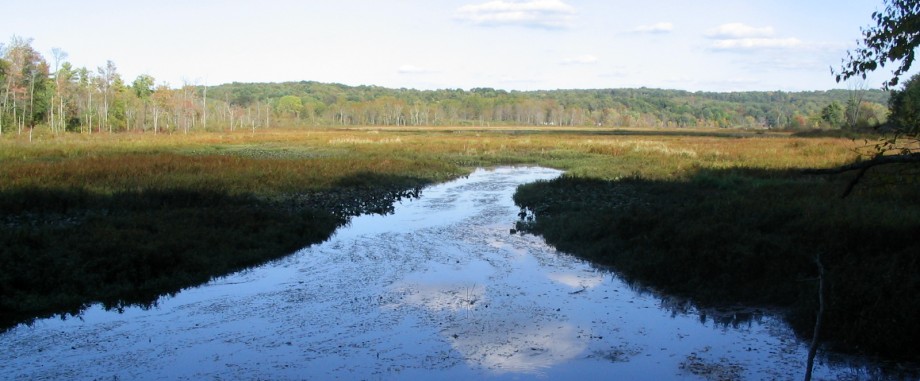
What better way to get through February than to go visit some of our summer breeding birds on their wintering grounds? My husband and I had originally planned to go in December, but we just didn’t get our act together quickly enough to make plans last fall. To tell you the truth I’m glad we didn’t go then because this winter has been a real doozy, and we needed the break now more than then!
So we left from Pittsburgh early on February 4th, and by noon we were in our rental car, leaving the airport near Belize City. Flying in, I couldn’t help thinking about what a migrating warbler sees as dawn arrives and it finds itself making landfall with a view something like this.
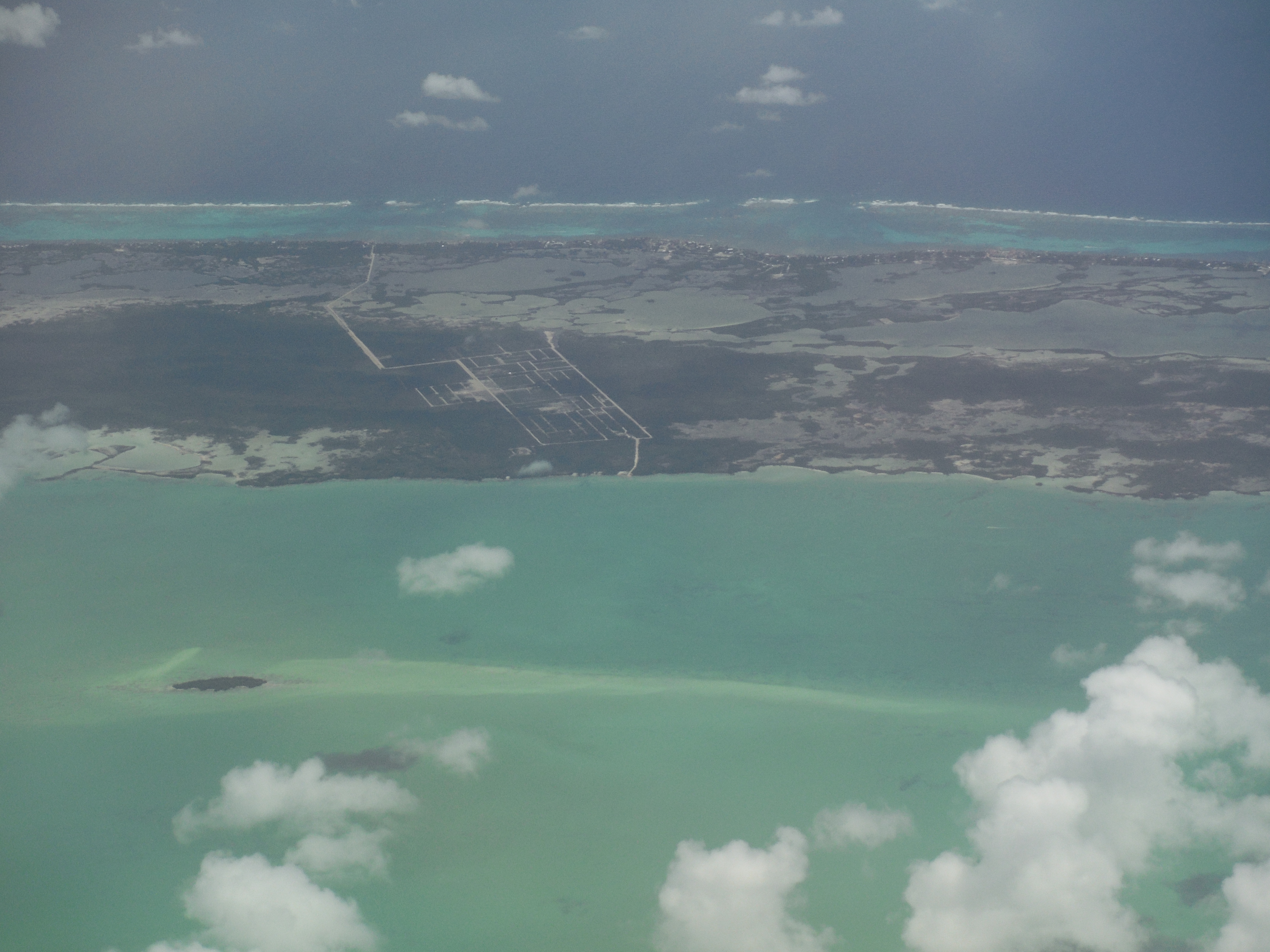
From the airplane. Is this what migrating birds see?
This was probably taken from a higher altitude than the birds actually travel at, but it was taken during our descent towards the airport. I was thrilled to see the blue Caribbean water, with the beaches and the mangroves surrounding all the cayes. No doubt the migrating warblers are also thrilled to be arriving here. What is incredible to me is that the recent fledglings, hatched in Pennsylvania woods just a few months earlier, make this flight on instinct alone, never having been here before. It’s true that they are flocking up with other migrants, and staying in touch with them using flight calls during the night as thy fly south, but it’s still incredible that they all do this, every year.
Neither Ron or I had ever been to Belize before, but we have spent a fair amount of time in Costa Rica. So as soon as we were on the ground we were seeing and hearing some familiar sights and sounds. Great-tailed grackles are ubiquitous and conspicuous both here and in Costa Rica, for example. Right away I began my attempts to resurrect my once fairly extensive knowledge of tropical plant identification. There were loads of trees, roadside weeds, shrubs, etc., that I knew I had once known the name of. Some of the names came back. Ceiba! Yes! But others… I could remember interesting factoids about some, but not the names.
Our first three nights we stayed at MIller’s Station, on the Placencia peninsula. The idea was to thoroughly thaw out and get in some beach time. And a few rum drinks. And see some coastal birds.
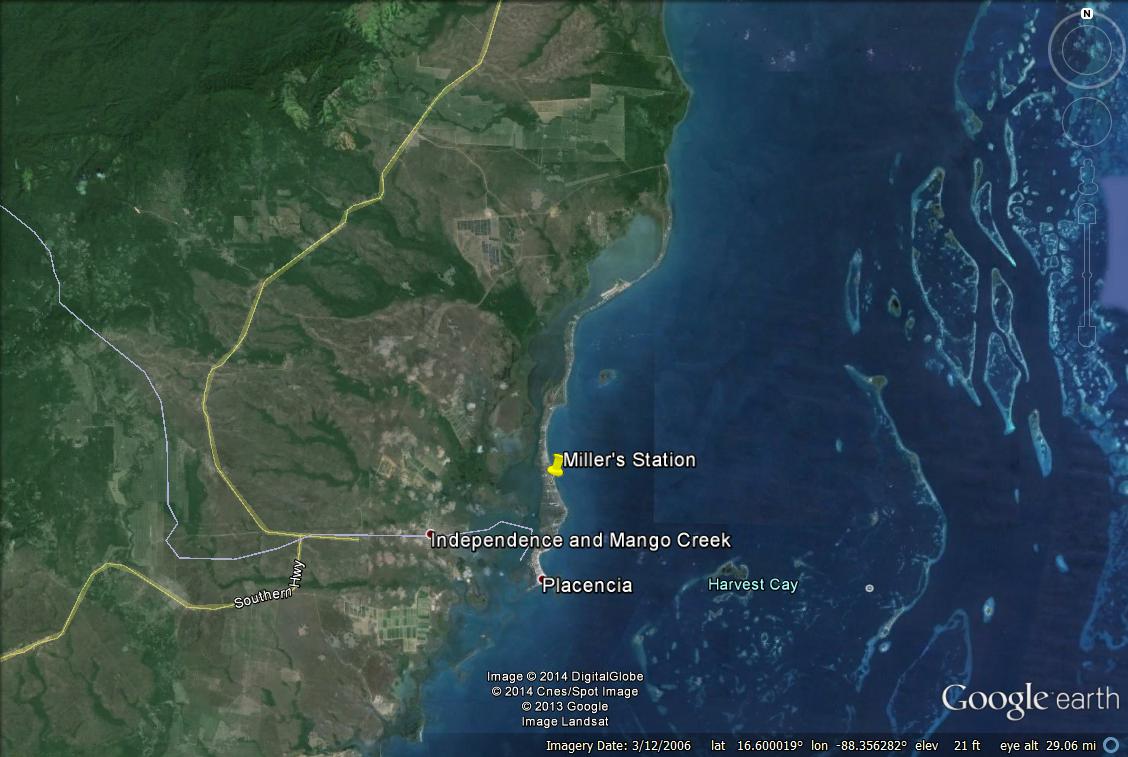
Stann Creek district of Belize, with the Placencia peninsula.
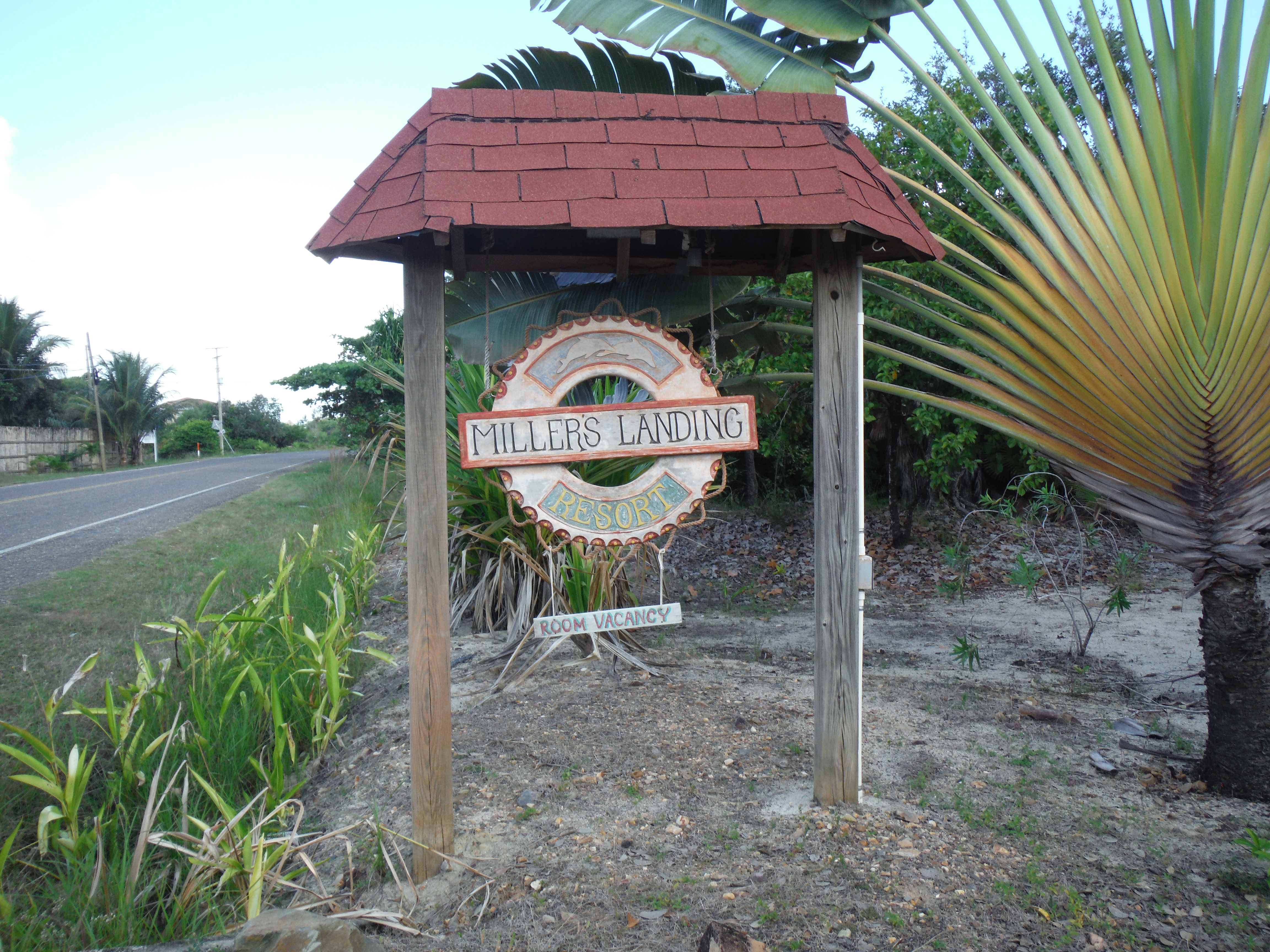
Sign at the entrance to Miller’s Station.
The first bird we saw when we got out of the car there was… a gray catbird! It turned out this site was loaded with wintering migrants. We got about 45 species of birds here total, many of them North American breeding species. We had lucked into staying at a low key place that had left a lot of the native coastal scrub vegetation in place, which was excellent for birding. The winding driveway leading in to the hotel had big oak trees (for scrub) that had just had a big acorn year. Much to Ron’s delight, there was a resident family of acorn woodpeckers (one of his former study species) at the end of the driveway. There were also several wintering hooded warblers (females), his current study species, each with a distinct territory. We walked along the beach, and there was a spotted sandpiper wagging its tail up and down, just like they do along the beaches at Presque Isle in the summertime. But here there were magnificent frigatebirds and brown pelicans flying overhead.
That’s all for this post- more on Belize coming soon! We go kayaking in the mangroves, and I admire thatching techniques.


 View from the Catbird Seat
Thanks for taking the time to share the pictures and your observations. Have fun. I think I should fill my feeder now.